
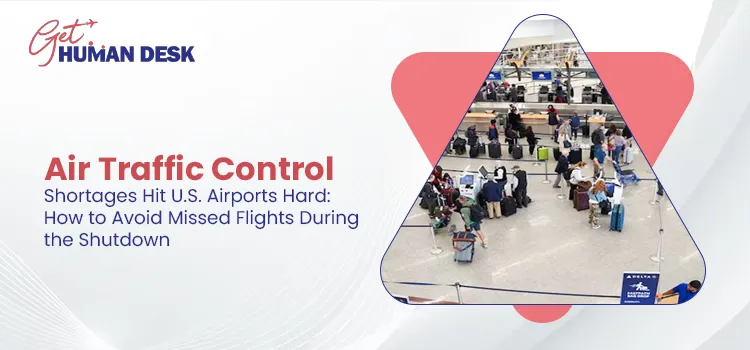
FAA Air Traffic Controller Shortage
So your bags made it to the destination point, but your flight couldn’t? An unexpected disruption causing your flight to be delayed due to an air traffic controller shortage can turn any simple connection into an expensive mess at the airport. Before your next air trip puts you in the same situation, discover what caused the disruption and how it’s affecting travellers to stay one step ahead.
Flight disruption due to a controllable air traffic shortage is not new to the airlines and has remained a serious workforce challenge in the past. The new FAA claimed that about 11,000 certified professional controllers were reported against a staffing target of 12,563 in August 2026. This staffing gap has contributed to traffic restrictions, flight delays, and disruptions during periods of high demand by travellers. Such airfare uncertainty can result in ruining your trip plans, leaving you frustrated and stressed. Read the blog further to understand what happened in US air traffic, how it affected flights, its history, what caused the incident, and more.
Does FAA air traffic controller shortage concern you abouta fight delay? Connect with our highly qualified travel guides at Call Us : +1-855-662-4577 for personalized assistance to review itinerary routes and suggest practical solutions for your journey.
Is There An Air Traffic Controller Shortage In The US?
Yes, currently the United States is experiencing a critical shortage of air traffic controllers of 3,000 in late 2026, with more than 90% of towers understaffed. According to the FAA, the deficit is 3,000 to 3,500 certified professional controllers below its optimal staffing target.
With this number, roughly 90% of the nation’s air traffic control towers and major radar facilities are without any staff support at the airport, forcing the remaining workforce to handle a higher volume of flight disruptions through mandatory six-day work weeks and extended overtime work, too. Read below to know the key details of the air traffic shortage in the US:
| Increased Demand | Over the last decade, the total number of US air traffic controllers dropped by 6% to 13%, while overall flight volume increased by 10% in total. |
| Staffing Levels | The FAA operates with significantly fewer certified controllers than required by its staffing models, running at roughly 10,800 certified professionals against a target of over 14,000. |
| Impact On Operations | Major hubs experience severe congestion and delays, forcing existing staff into mandatory six-day work weeks and heavy overtime. |
When Did The Air Traffic Controller Shortage Start?
The current air traffic controller shortage news officially began escalating into a critical crisis following the 2013 federal budget sequestration and government shutdown. However, aviation experts trace the structural root of the crisis back to 5 August 1981, when their current president fired around 11,345 air traffic controllers. Here is a quick detail on when the air traffic controller shortage was first experienced:
- The 1981 Baseline Shift: This year witnessed mass firings and subsequent decertification of PATCO, causing major understaffing and a demographic retirement.
- The 2013–2023 Gap: During the federal budget cut-off and government shutdown, the FAA hired about two-thirds of the controllers for its own staffing models.
- FAA Hiring In 2025: The agency launched a major hiring shutdown after staffing challenges.
- Current Issue: In 2026, the FAA had approximately 11,000 certified professional controllers against a staffing target of 12,563.
Why Is There An Air Traffic Controller Shortage?
The FAA air traffic controller shortage is the result of several challenges faced due to cutbacks and other sudden events occurring at the same time. The issue has been a product of invisible issues piling up as air travel recovered after the pandemic. Here, the individual airline air traffic controller shortage can be the combined effect of not hiring new staff for over the past decade, slow training pipelines, and extreme flight disruption events. The key reasons behind the air traffic controller shortage are given below:
- Long Training Timelines: To become a fully certified controller can take more than two years of training, depending on the complexity of the facility.
- Insufficient Hiring: The FAA did not hire enough candidates from 2013 to 2023, and only about two-thirds of the controllers were hired as per its staffing models.
- Retirements AndWorkforce Losses: The FAA was required to replace controllers it lost through resignations, transfers, retirement, promotions, and training deductions.
- High Training Reduction: Not all trainees get time to complete the certification process with the training reduction, which is one of the largest sources of workforce losses.
- Increasing Air Traffic Demand: As flight activity increases, more controllers are needed to maintain staffing levels appropriate for traffic demand.
- Staffing Gaps: High-traffic demands have experienced significant staffing shortages, which added pressure on existing controllers.
US Airport Delays And Flight Cancellations: What Travellers Should Know
Widespread US Airlines flight disruptions are impacting thousands of flight delays and hundreds of cancellations piling up nationwide. The US Airport delays and flight cancellations adversely affect travellers; read below to know what rights they are eligible for in such conditions:
Common Causes
- Staffing And Capacity: Air traffic controller requirements and operational adjustments usually trigger flight schedule reductions.
- Severe Weather: Bad weather outside of the airline’s control, such as heavy rain, high winds, or thunderstorms, reduces flight arrival and departure rates.
- Hub Impacts: Major hubs that experience crowds, such as Chicago O’Hare or DFW, face space issues causing ripple effects around the domestic networks.
Passengers Rights
- Controllable Delays: You can review your airline policies on flight delays under controllable reasons for hotel accommodations or meals on flight disruptions as per passengers’ rights.
- Refund Eligibility: Passengers can claim a full cash refund of their ticket value if their flight is significantly delayed, disrupted, or cancelled by the airline.
- Tarmac Limits: Domestic flights are restricted from remaining on the tarmac for more than three hours without de-planing for the safety or security purposes of the travellers.
Expert Tip: A missed connection on your flight can suddenly become a travel nightmare. Dial Call Us : +1-855-662-4577 to speak with our travel agents to review your options and choose the right alternative arrangements for smoother travel during an unexpected flight schedule change.
What Caused The Air Traffic Controller Shortage?
The possible reasons causing air traffic controller shortages are due to several factors, such as a decade of no hiring programs, federal government shutdowns, a bottlenecked onboarding process, and training disruptions. Here is detailed information on what caused the air traffic controller shortage, as mentioned below:
- Mass Retirements: Retirement of the older controllers hired in the early 2000s, faster than new staff hiring before they even finish training.
- Government Shutdowns: Federal shutdowns from the past froze hiring and training programs completely for weeks or months, playing a major role in the air traffic shortage.
- Insufficient Hiring: Between 2013 and 2023, several agencies like the US FAA hired only about two-thirds of the controllers as per their staffing model requirements.
- COVID-19 Pandemic: Health restrictions during the 2019 pandemic halted training programs and reduced classroom capacities for new entrants for almost two years.
How Does The Air Traffic Controller Shortage Affect The Flights?
An air traffic controller shortage can directly affect flights by causing staff shortages, major flight delays, ground stops, and schedule cuts by the FAA. Since staffing is tight, the FAA may slow down the flow of traffic, adjust flight schedules, or limit the number of aircraft operating on busy routes. The major effects flights experience due to the air traffic controller shortage are given below:
| Missed Connections | Even if the first flight operates, the ATC-related issue can delay your next flight, causing passengers to miss their connecting flights. |
| Safety Risks | Due to an air traffic shortage of certified workers, the other remaining controllers are made to work extra for full weeks and in long shifts. |
| Flight Cancellations | Flight delays and cancellations may significantly disrupt flights, making it difficult to operate at the airline’s capacity. |
| Ground Stops | In case of understaffing, the system pauses all incoming flights for a specific airport until the facility has enough staff to manage it. |
| Knock-On Effects | A delay at one airport can affect the arrival of the next flight, causing it to be late and affecting travellers and connections on the same day. |
| Schedule Changes | Airlines may reduce the operation of flights at individual airports facing an air traffic shortage with no capacity to handle the crowd. |
| Arrival Delays | The FAA is responsible for reducing the rate at which aircraft arrive at an airport with staffing or other operational issues and limited capacity. |
| Longer Travel Duration | Aircraft may experience re-routing, be put to hold in the air, or be forced to take less direct routes during limited capacity problems. |
| Flight Delays | With the availability of fewer controllers at the airport, aircraft are required to wait before landing, taking off, or entering congested airspace. |
| Departure Holds | Airlines may be instructed to keep aircraft at the gate until sufficient capacity is available in the destination or en-route airspace. |
Note: With the air traffic controller shortage issue causing flight delays and other travel issues, you need a backup strategy for your flight. Reach out to our travel guides at Call Us : +1-855-662-4577 for personalized assistance with planning your trip, itinerary changes, and practical solutions designed around your needs.
How Does The Air Traffic Controller Shortage Affect Airports?
The air traffic controller shortage impacts individual airport operations by reducing flight capacity, holding flights, triggering massive flight delays, and causing long-term structural issues for the aviation network. The FAA is responsible for controlling the system with controllers short of optimal staffing levels. Read below to understand how the air traffic controller shortage can affect the airports:
Disruption Chain
Flight disruption occurring to one airport can start a chain of flight delays causing other flights to delay their arrival or destination timing across the entire aviation system, affecting connecting flights and aircraft positioning.
Delays And Ground Stops
Understaffed towers and Terminal Radar Approach Control facilities trigger hours-long US airport delays, departure delays, and ground stops.
Reduced Capacity
The Federal Aviation Administration (FAA) slows the flight traffic flow rate or cuts the percentage of flights at busy airports so on-duty staff is not overwhelmed.
What Happened During The 2025 Government Shutdown?
During the 2025 US government shutdown of 43 days in autumn, airline services experienced severe staffing shortages, widespread flight delays, ticket cancellations, and emergency capacity cuts at major US airports. The government shutdown flight disruptions directly impacted the FAA, which lasted for 43 days, making it the longest federal government shutdown in US history. During this period, many air traffic controllers continued to serve airlines without pay, while staffing shortages caused additional pressure on the national airspace system. Read below to know what the impact of the government shutdown on airlines in 2025 was:
Consequences Of Government Shutdown 2025
- FAA Reduced Flights: Start of November 2025 witnessed flight reduction by the FAA at 40 major US airports. The initial reduction was reported 10% and was later improved theirstaffing conditions.
- Massive Cancellations And Delays: Major travel hubs across the busy routes of New York, Los Angeles, Chicago, and Atlanta experienced thousands of flight delays or cancellations over consecutive weekends.
- Emergency Flight Reductions: The Federal Aviation Administration made capacity cuts of 4% and scaled up at 40 major US hubs to maintain airspace safety.
- No Pay: Several Air traffic controllers stayed on duty during the shutdown without even receiving pay-checks.
- Staffing Issues: The FAA entered the shutdown with controller staffing below the level needed for reliable operations. As the shutdown stayed longer, more controllers missed work, which increased pressure on facilities.
- Airlines Cancelled Flights: Passengers reported government shutdown flight cancellations and delays connected to the FAA restrictions.
- Staffing Shortage: FAA recorded a large number of staffing shortages, with the events rising to 81 on 8 November 2025, compared with much lower levels before the shutdown.
- Flight Delays Increased: Staffing shortages forced the FAA to slow traffic at some airports, stopping flights from taking off and introducing measures such as ground delays and increased aircraft spacing.
How Can The Air Traffic Controller Shortage Be Fixed?
The FAA can implement several plans to fix the air traffic controller shortage, including better scheduling, modernization, quick hiring of new controller staff, and expanding training programs for the air traffic control system. This combination of aggressive recruitment aiming for younger talent like video gamers, utilizing modern AI congestion tools, expanding collegiate training partnerships, and raising compensation can fill the staffing gaps. Learn about the smart strategy you can implement to fix the air traffic controller shortage in today’s time:
Training And Education
- Increased Training Partnerships: Airlines are implementing technology training programs that speed up certification, serving as a stronger investment in the ATC workforce to expand controller training partnerships with top-ranking colleges and universities.
- Expand Training Capacity: More training seats and partnership opportunities with colleges and technical schools give candidates a larger pipeline of qualification.
- Speed Up Certification: Better education and training for the air traffic controller profile can help reduce the 2-year-long certification required as the standards period for education.
Modernization And Scheduling
- Recruit Experienced Candidates:The FAA is expanding the year-round recruitment process by selecting experienced controllers from the military and private-sector aviation.
- Optimized Scheduling: The airlines are optimizing the modern staffing models and scheduling tools recommended by the National Academy of Sciences to reduce burnout and curb excessive overtime.
- Modernize ATC Technology: They are upgrading outdated air traffic control equipment to help controllers manage growing traffic more efficiently.
- Improve Scheduling: Modern scheduling systems to match the new controller staffing training schedule as per the high traffic demand and reduce unnecessary overtime.
- Utilize Advanced Technology: The FAA plans to use artificial intelligence, simulation, and other data-driven tools to improve training, airspace, and manage traffic efficiently.
Hiring And Retention
- Increase Hiring: The FAA’s current workforce plan is hiring around 2,200 new controllers in 2026, 2,300 new candidates in 2027, and 2,400 new hires in 2028.
- Reduced Workload And Fatigue: The airlines are increasing staffing and improving schedules, reducing reliance on mandatory overtime, which adds pressure on controllers.
How Long Will Flight Disruptions Last?
The FAA air traffic controller shortage resulting in flight disruptions and other travel-related issues is expected to continue for the next 18 to 24 months before the agency experiences a fully certified staff with its controllable measures and implementing advanced strategies. The expected duration of flight disruptions due to the FAA air traffic shortage is given below:
- Longer-Term Restrictions: Some airports and busy hubs still continue to operate under reduced schedules while the FAA still continues to operate with constrained staffing or airspace.
- Temporary Delays: Restrictions on staffing related to traffic causes flight delays that may last several hours during busy periods.
- Several-Day Effects: Major airports experiencing repeated capacity problems require several days to return aircraft and crews to their planned schedules.
- Same-Day Disruptions: Flight delays can persist throughout the day since late crew, connections, or aircraft create additional delays later in the airline’s schedule.
How To Check For Flight Delays And Cancellations?
You can check current flight delays and cancellations updates by using the FAA Air Traffic Operations Status or the Fly FAA site using the online step-by-step guide given below for quick help:
Step 1: National Airspace System (NAS) Status
- Open the FAA Operations Status website online.
- View the map or airport list for your specific connection, arrival airports, or departure as required to know its update.
- Check if there are any ground delays, general departures/arrivals delays, or ground stops.
- Click on the specific advisories or airport codes to get updates on the impacting condition.
Step 2: Track Your Flight
- Utilize the online flight tracking tool for the specific airline.
- Input your specific flight number or PNR code.
- Press the ‘Where is my plane now?’ option to see whether the aircraft arriving at your airport is delayed for the scheduled day.
Step 3: Check Airlines Website
- Open your airline’s official mobile app or visit their website.
- Log in or enter your flight PNR number and date.
- Review your flight’s real-time status. Airlines usually update their status and notify you of the flight situation every 30 minutes.
How Can Travellers Avoid Flight Cancellations And Delays?
You can avoid flight cancellations and delays caused by the US FAA air traffic controller shortage by tracking the flight status in real time, booking the first flight of the day, and avoiding tight connections under 90 minutes at major hubs. There are other major factors you can avoid falling for to prevent flight cancellation due to the airline’s controllable air traffic shortage issue by following the strategy given below:
Online Sites And App
- Monitor FAA Status: You can review the real-time FAA Operations prior to arriving at the airport.
- Download Carrier Apps: Enable instant push notifications to get instant updates for gate changes and rebooking options.
- Add Protection: Choose to purchase flexible tickets instead of non refundable and travel insurance that can cover alternate flights and other travel benefits.
Flight Time And Route
- Book Earliest Flight: Prefer booking the morning schedule flights (between 5:00 and 8:00 AM) to reduce flight delays in peak hours.
- Avoid Major Hubs: Avoid catching flights from busy or major hubs that may experience severe controller deficits.
- Select Non-Stop Flights: Refrain from taking risky connections that have more chances of compounding terminal blockage.
At The Airport
- Open the individual airline’s app for the current real-time update of the flight if it’s cancelled or delayed.
- Arrive early at the airport prior to the flight scheduled time to have ample time for check-in and security.
- Directly connect with the airline’s customer-service desk or agent without wasting much time if online rebooking does not work.
- Keep your phone charged in case of any emergency or to call and receive airline updates.
Air Traffic Controller Shortage Solutions: What Is The FAA Doing?
To combat the nationwide air traffic staffing deficit, the FAA is tackling the air traffic controller shortage via its gamer recruitment strategy, higher annual hiring targets, and new artificial intelligence tools. Theair traffic controller shortage solutions implemented by the FAA are mentioned in detail below:
Utilizing Modern Technology And AI
- Predicts traffic flows and potential conflicts earlier to save time.
- Launched an $875 million SMART AI platform for its candidates to improve learning.
- Requested billions in infrastructure upgrades to fund new hiring.
- Retains human control for aircraft separation.
Hiring And Recruitments
- Sets higher annual trainee targets.
- It is focused on recruiting thousands of quick and fast-paced multitaskers.
- Targets video gamers for spatial skills.
- Targets achieving 2,200 new trainees by 2026 and 2,300 new trainee hires by 2027.
Bulk Training And Improved Pipeline
- Shave 5 years off the hiring process by improving the certification process.
- Expanding college and technical school partnerships.
- Lowering academy washout rates to 25 percent.
- Deploying modern, automated scheduling tools.
As the blog reaches an end, we hope you now know what happens when there’s an air traffic controller shortage and how a government shutdown may impact aviation. The FAA air traffic controller shortage is a long-term staffing challenge that has been taking place for quite some time. Read the blog to understand how traffic flow affects flight delays, operational capacity, and how the shutdown can create funding issues and workforce disruption. In this blog, we have mentioned the latest news on what airlines are facing due to the FAA air traffic controller shortage and what measures can improve the situation and bring change in staffing. Don’t want to risk losing your dream trip to another flight disruption? Call our travel guide at Call Us : +1-855-662-4577 and receive tailored assistance for your specific itinerary and travel smoothly.
Also Read:
Airlines Missed Flight Policy
You need to choose a journey with longer connection times. Travelers may also book a direct flight to avoid a missed connection. Travel insurance (that covers missed connections) is another option.
Yes. With potential slowdowns at security and longer ground delays, allow extra time beyond normal guidelines.
Yes. Airlines often offer rebooking options/ credits/ refunds on flight disruptions. It applies when service levels are disrupted due to staffing issues.
You need to check your flight status frequently. Travelers can sign up for alerts/ consider earlier or later flights/ have a backup plan.
The Air traffic controllers are taking sick leave from work (due to the government shutdown). It has led to a rise in flight delays/ cancellations.